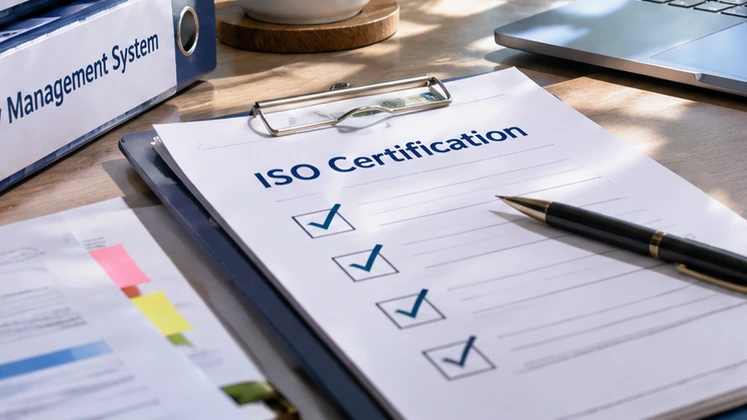
The process of certifying a management system according to ISO standards normally includes registration, review of documents and contracts, stage 1 assessment, stage 2 assessment, handling of non-conformities, decision on certification and periodic monitoring. This is the reference process; Each certification program may have different requirements and details.
Step 1. Enterprise determines need and submits registration
First, the business determines the desired standard, version, and scope. The initial set of information usually includes legal name, production or service activity, employee number, location number and contact point. Registration needs to be sent to the appropriate certification organization, not to mistake the consulting organization or training unit as the organization with the right to issue certificates under the program.
Step 2. Certification organization reviews and plans
The certification organization checks the eligibility, scope of expertise, operational characteristics and complexity level, then agrees on service conditions, fees, methods and assessment schedules. Enterprises should clarify monitoring, recertification costs and other expenses, if any.
Step 3. Phase 1 assessment
The goal is typically to determine system readiness, review documentation, scope, operational context, and issues that need to be addressed prior to field assessment. Activities can be held at the facility or according to options allowed in the program. Phase 1 results help determine the phase 2 assessment plan.
Step 4. Phase 2 assessment
The assessment team observes the situation, interviews the person in charge, examines records and collects evidence to determine whether the standard requirements have been effectively implemented or not. Enterprises must demonstrate the actual process, not just present sample documents. Issues are recorded as findings, which may contain nonconformities.
Step 5. Fix non-conformities
If there are non-conformities, the assessed organization needs to analyze the cause, implement appropriate remediation and provide evidence to the certification organization within the agreed deadline. A standard improvement point does not automatically mean the certificate is rejected; Conclusions are part of the assessment process and certification decision.
Step 6. Review and decide to issue a certificate
Assessment documents are reviewed according to the decision-making mechanism of the certification organization. When the requirements are met, a certificate is issued, stating the organization name, standard/version, scope, location or required information, code number, effective date and related conditions. Completing a training course or internal self-assessment does not replace this step.
Step 7. Monitoring and recertification
After certification, the organization must continue to operate and improve the system, participate in monitoring according to the certification program and carry out recertification procedures when necessary. Many management systems certification programs have a three-year cycle with monitoring activities, but businesses should check the specific terms and duration of the certification.
How long does it take to get ISO certification?
There is no fixed time. The time to prepare the system before registration depends on the current status, scope and personnel capacity; Actual assessment team time depends on schedule and complexity; Recovery and review time may arise. Do not advertise 'get a certificate immediately' if there is no evidence that the system meets the requirements.
Questions that need to be clarified before the evaluation session
Before confirming the audit schedule, businesses should ask the certification body: what scope will be recorded on the certificate, which facilities and shifts are considered, what are the applicable standards and versions, who is responsible for coordination, what documents need to be prepared at each stage and when it is necessary to correct non-conformity findings. These contents help the internal team prepare the right things instead of just collecting documents.
In phase 1, it is necessary to clarify issues of readiness to proactively handle them before phase 2. When evaluating phase 2, practitioners must be able to explain the process and point out appropriate evidence; The person in charge should not only focus on practicing model answers.
After receiving the certificate, businesses need to schedule follow-up assessments, change locations or scope, handle complaints, and prepare for recertification. The decision to issue a certificate is a milestone in the management process, not the end of the responsibility to maintain the system.
Conclude
Preparing documents early, choosing a suitable certification organization and maintaining a management system are three factors that help make the process transparent. Certification should be based on real-world assessments and reliable evidence.