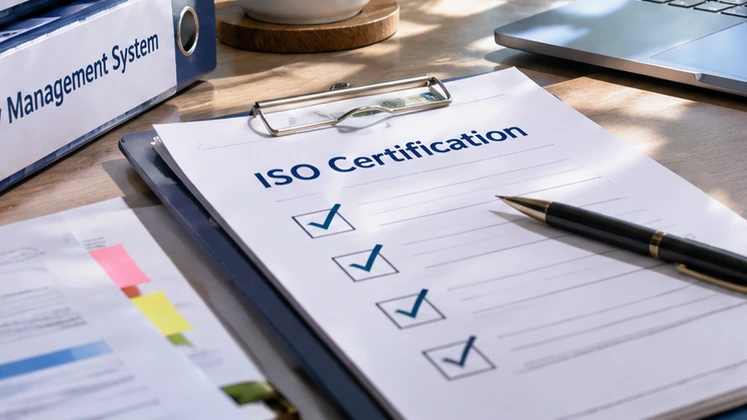

Certification is the activity of confirming that an object meets defined requirements according to the respective certification program. Businesses should choose the type of certification based on the subject to be evaluated, legal requirements, applicable standards and target market, instead of registering just because the certificate is popular.
1. Product and goods certification
Product certification helps confirm products and goods meet a specified standard, regulation or certification program. In Vietnam, standard conformity certification is associated with the selected standard; Certificate of conformity associated with technical regulations and relevant management requirements. For goods subject to mandatory management, businesses need to check the obligation to declare conformity, quality inspection or specialized procedures, not just find a certification unit.
For example, construction materials, children's toys or electrical equipment may fall under different regulatory scopes. Businesses must determine the correct product code, intended use and valid document before choosing certification.
2. Management system certification
The object being evaluated is the organization's management system, not each product. For example ISO 9001 on quality management; ISO 14001 on environmental management; ISO 22000 on food safety; ISO 45001 on occupational safety and health; ISO/IEC 27001 on information security; ISO 50001 on energy management. A certificate has a scope that describes the activity, location, and applicable standards; it does not automatically confirm that every product meets the standard.
When choosing system certification, determine whether the need is from customers, procurement, internal controls or productivity improvements; Then consider deployment and maintenance resources.
3. Process certification, good practices and sustainable production
Programs such as VietGAP, GLOBALG.A.P., GMP or organic certification target production process requirements, good practices or products according to specific criteria. HACCP is a hazard analysis and critical control point approach, integrated into food safety management; All HACCP activities should not be assumed to be the same certification program.
In agriculture, fisheries and food, growing area, processing facility, traceability and buyer requirements often determine the appropriate program.
4. Service and personnel certification
Depending on the program, services can be certified according to service quality criteria or delivery process. Personnel certification evaluates an individual's ability to perform specialized work, such as a systems auditor, non-destructive testing personnel, or technical expertise according to the respective program. Do not confuse professional licenses, training certificates and competency certificates.
5. Activities should not be arbitrarily included in certification
Accreditation confirms the organization's ability to assess conformity within the scope of accreditation. Testing, inspection, inspection and verification of emissions reports have different purposes, objects and outputs from management system certification. These services may appear together in the quality assurance chain but are not synonymous.
6. Checklist of options
Step 1: Identify the product, system, process, service or personnel that needs to be evaluated. Step 2: Identify standards, regulations and mandatory obligations. Step 3: Check that the providing organization has the appropriate capacity, scope of accreditation or legal conditions when applicable. Step 4: Ask for clear process, initial costs, monitoring and maintenance. Step 5: Verify the scope, validity and status of the certificate after issuance.
Three situations help choose the right type of certification
A mechanical processing business was asked by a customer to demonstrate stable delivery capabilities. It is necessary to determine in advance whether the customer wants to evaluate the quality management system or needs certification for a specific product. ISO 9001 may be suitable for process management requirements, but system certification does not replace testing results or product certification when required by contract.
For a food processing facility, it is recommended to simultaneously check mandatory food safety regulations, product type, consumption market and buyer's requirements. HACCP, ISO 22000 or another certification program has different scope and standards; cannot be chosen just because the certificate name is familiar.
If an enterprise produces goods subject to technical regulation management, priority will be given to determining QCVN and mandatory procedures first. Only then will we see which voluntary standard certification adds value. These three situations show that the same business may need multiple forms of assessment, but each form must answer a specific requirement.
Conclude
There is no one type of certification that fits every organization. A good decision starts from the requirements for using the certificate, the subject being certified and the actual capacity of the assessment organization. The CTISE Productivity and Quality Center supports businesses throughout the process, from initial advice and needs assessment to standards implementation, document preparation and coordination of independent audits. Certification decisions and certificate issuance remain the responsibility of the authorized certification body; CTISE does not claim accreditation or certification-issuing authority.